
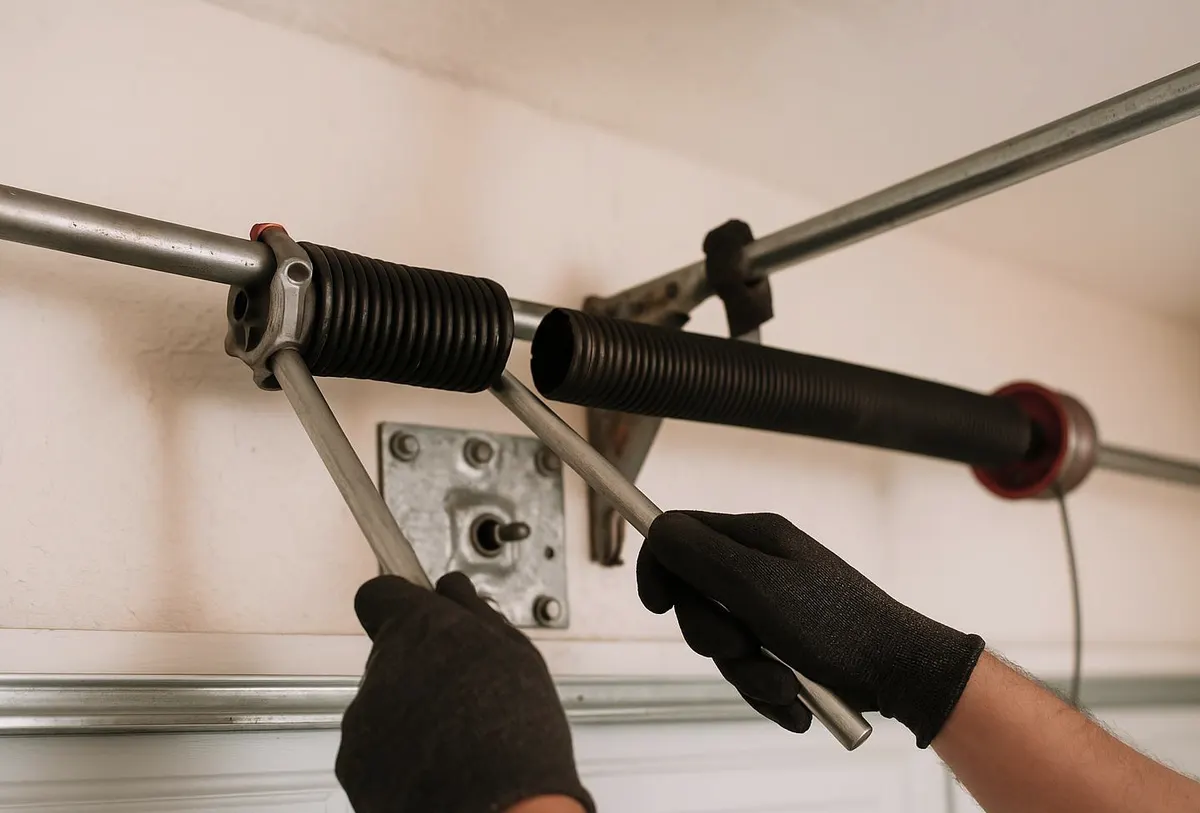
On a typical service call in this area, the homeowner meets the technician in the driveway and runs the door up and down a couple of times so he can hear it for himself. Nine times out of ten, the sound tells him almost everything before he even opens the toolbox. Coastal salt air corrodes hardware faster than it would inland, dry summer dust works its way into rollers and hinges, and winter rain swells wood jambs and shifts tracks just enough to change the sound a door makes. Here's how to read those noises the way a technician does.
Grinding
Grinding is a deep, mechanical, metal-on-metal sound that usually happens on every cycle, often louder when the door is opening than closing.
- Rollers: This is the first thing checked. Steel rollers wear out and start grinding against the track, especially on older installations. The fix is swapping them for nylon rollers with sealed bearings, which run quieter and hold up better in salt air.
- Bearing plates: Next, the technician checks the bearing plates at each end of the torsion spring shaft. Dried-out or pitted bearings grind under load and need fresh lubrication or replacement.
- Track alignment: A bent or misaligned track forces rollers to grind as they're pushed sideways. This gets corrected by loosening the track brackets and resetting the track with a level.
- Opener drive gear: On chain-drive openers, a worn plastic drive gear inside the motor housing grinds at the unit itself, not the door. This means a gear-and-sprocket kit replacement.
Squealing
Squealing is a sharp, high-pitched sound, often worse right after a stretch of dry, dusty weather when lubricant has worked off the moving parts.
- Lack of lubrication: This is checked first and is the most common cause locally, since dust from dry summers and wildfire-smoke season settles into hinges and rollers and dries them out faster than normal. The fix is a proper silicone-based lubricant applied to hinges, rollers, and the spring, not WD-40, which attracts more grit.
- Worn or rusted rollers: In coastal and ocean-facing properties, rollers can corrode even with regular lubrication. Worn ones get replaced rather than re-lubed.
- Spring coil friction: If the squeal is coming from overhead near the header, the torsion spring coils may be rubbing against each other. A light lubrication solves minor cases; a spring showing rust or visible wear gets replaced.
- Opener chain tension: A loose chain on a chain-drive opener can squeal as it runs over the sprocket. Tightening it to spec usually resolves it.
Popping
Popping is a loud, sudden bang or crack during operation, sometimes paired with the door jerking or hesitating mid-travel. This one gets taken seriously fast.
- Torsion spring: Checked first, since a spring under extreme tension can pop as it nears failure, or has already developed a crack in the coil. A visibly gapped or discolored spring is replaced immediately, and this is not a DIY repair given the stored tension involved.
- Cables: Frayed cables or a cable that's jumped off its drum can pop and bind. This calls for cable replacement and drum realignment.
- Track sections: Expansion and contraction between warm dry days and cool, damp mornings can shift track joints just enough to cause a pop as the rollers pass through. Sections get realigned and re-secured.
- Opener belt or chain slack: A pop at the very end of travel can mean slack in the opener's belt or chain causing a jolt at reversal. Tension gets adjusted to spec.
Rattling
Rattling is a looser, vibrating sound that often shows up during travel or even when the door is sitting still in gusty wind.
- Loose hardware: Checked first, since bolts, hinges, and brackets work themselves loose over years of cycling, and earthquake retrofit braces can shift slightly over time too. Everything gets re-torqued with an impact driver.
- Opener chain or belt slack: A rattling chain-drive opener usually just needs the chain tension adjusted.
- Loose opener unit: If the motor housing itself is vibrating against its mounting bracket, it gets re-secured or isolated with a vibration mount.
- Weatherstripping and seals: A worn bottom seal can flap and rattle in coastal wind. Replacing it is a quick, low-cost fix.
When to Call Santa Barbara Garage Door Pro
Grinding and popping are the two sounds worth calling about right away, since they often point to spring or cable problems that can leave a door stuck shut or, worse, cause injury if they let go unexpectedly. We offer Spring Replacement and full Garage Door Repair for exactly these situations, and if the noise started suddenly and the door won't move safely, our Emergency Garage Door Service covers that too. Squealing and rattling are good candidates for routine Garage Door Maintenance, where we lubricate, tighten, and inspect rollers, hinges, and hardware before a minor noise turns into a bigger repair.
If your garage door in Santa Barbara, Goleta, Montecito, Carpinteria, Summerland, Hope Ranch, Isla Vista, or Ventura has started making a sound you can't place, give us a call. We'll listen to it, diagnose it on the spot, and fix it right the first time.